Enterprise software has traditionally followed long delivery cycles — planning, architecture, coding, testing, deployment and user acceptance. That structure protects quality, but it also delays business value when an organisation needs operational insight quickly.
AI-assisted software development is changing that equation. Rather than replacing engineers, AI helps experienced teams automate repetitive work, accelerate implementation and tighten code quality — compressing delivery timelines without compromising production standards.
At Space Stem, we saw this firsthand while building a real-time, ERP-integrated operations dashboard for a client managing over 43,000 registered customers and more than 600 orders every day. Using AI-assisted development alongside proven engineering practice, our team reduced the estimated timeline from roughly two months to just two weeks — while maintaining scalability, security and long-term maintainability. This is how we did it, and what it means for teams modernising their operations.
The client ran daily operations on their ERP system. The data was all there — but extracting meaningful insight meant navigating multiple reports across different modules. As the business grew, that created real friction:
With 600+ orders processed daily, management needed a single platform showing operational performance at a glance. Under a conventional software development lifecycle — business analysis, architecture, UI/UX, backend, frontend, ERP integration, testing, UAT and deployment — a project like this would typically take around two months.
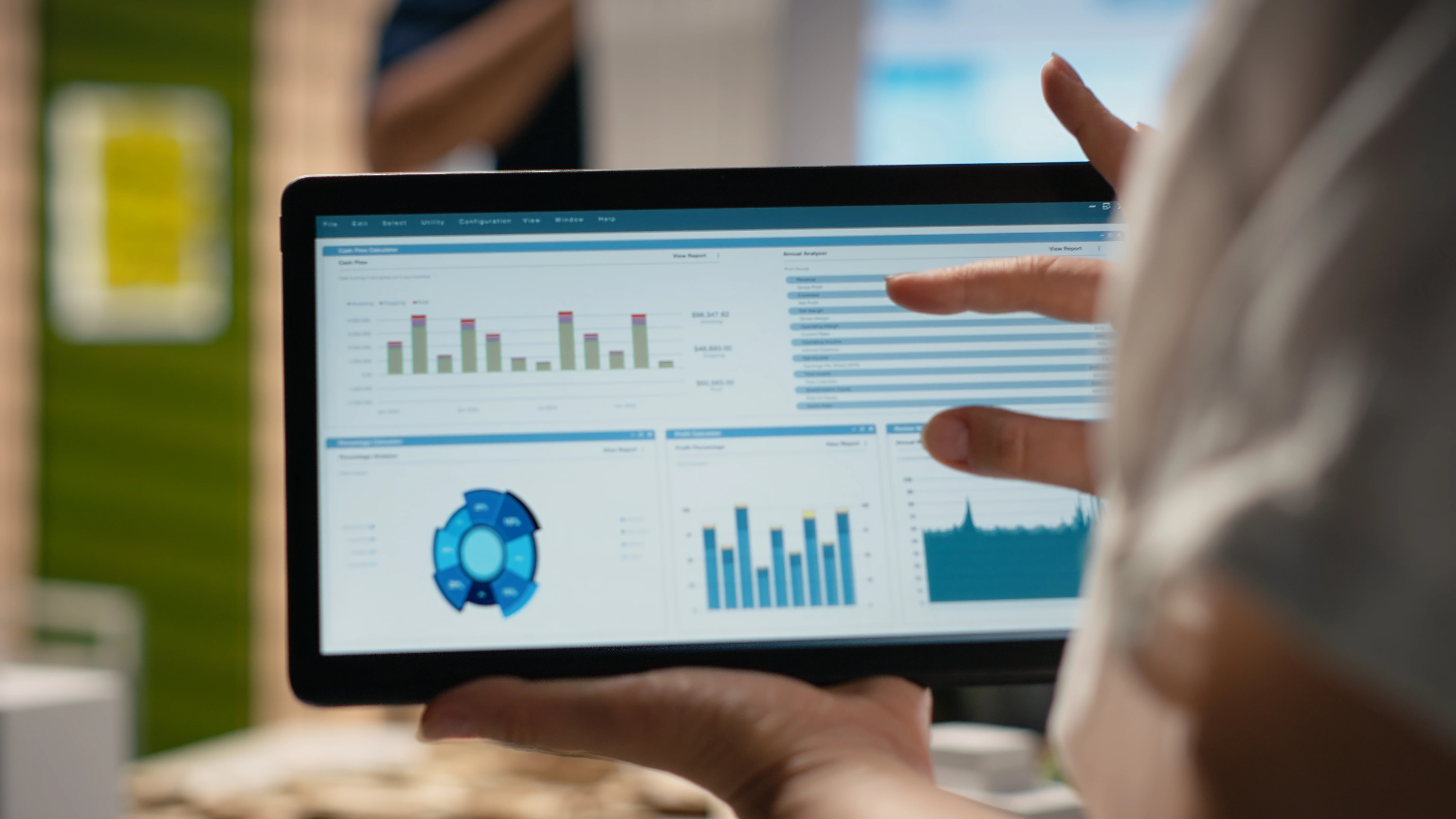
Our engineering team designed and built a centralised, web-based operations dashboard that integrates directly with the client’s ERP. Instead of compiling reports by hand, decision-makers now see live business metrics the moment they open the dashboard.
The application continuously synchronises operational data from the ERP and presents it through interactive charts, KPI cards and business-intelligence visualisations — a single source of truth for operational monitoring across the organisation.
Business users instantly track critical operational metrics:
Full visibility into every stage of order processing, so teams can pinpoint bottlenecks fast. Supported stages: Assigned, Pending, Partially Fulfilled and Fulfilled.
The solution integrates securely with the client’s existing ERP through APIs, keeping dashboard data accurate and current with no duplicate data storage required.
Static spreadsheets were replaced with interactive visualisations — order-status distribution, daily operational summaries, performance metrics, trend analysis and BI charts — so stakeholders grasp operational trends at a glance.
Management can also monitor top-selling products, inventory availability, product demand and stock visibility — supporting smarter purchasing and inventory planning.
Performance was a priority throughout. The dashboard was engineered to support 43,000+ registered customers, 600+ daily orders, large operational datasets, continuous ERP synchronisation and future growth.
The most significant part of this project was not just the dashboard — it was how it was built. Rather than a fully traditional workflow, our engineers adopted an AI-assisted approach. It is worth being precise about what that means.
AI did not design the system, make architectural decisions or replace engineers. It acted as an engineering accelerator — assisting with repetitive coding, code suggestions, debugging, documentation and refactoring. Our experienced engineers remained fully responsible for:
This collaboration between experienced developers and AI cut implementation time sharply while preserving enterprise-grade engineering standards.
| Layer | Technology |
|---|---|
| Backend | ASP.NET Core (REST APIs, business logic) |
| Frontend | Angular (interactive dashboard UI) |
| Database | SQL Server |
| Data Visualisation | AG Charts (KPI cards, trend charts) |
| Integration | Secure ERP APIs (real-time sync) |
| Development Approach | AI-assisted software development |
AI-assisted development reduced the overall timeline from about two months to just two weeks.
Management now has instant access to live operational data instead of waiting on manually generated reports.
Interactive dashboards surface operational issues earlier, improving responsiveness across teams.
Automated KPI tracking has cut repetitive reporting work while improving accuracy.
The architecture is designed to support future enhancements without major redevelopment.
AI is reshaping how enterprise software is built. Its greatest value is not replacing developers — it is freeing experienced teams to focus on solving business problems instead of repetitive implementation. Combined with proven engineering practice, AI helps organisations:
As AI capabilities evolve, organisations that adopt AI-assisted development responsibly will gain a real competitive advantage in delivering enterprise software.
This project shows how AI-assisted software development can significantly compress enterprise delivery timelines without compromising quality, security or scalability. By pairing experienced engineers with modern AI-assisted practice, Space Stem delivered a production-ready, ERP-integrated operations dashboard in two weeks rather than an estimated two months — and gave the client a scalable, maintainable platform with real-time visibility that supports future growth.
For organisations modernising operations, the lesson is simple: AI-assisted development is not about replacing engineering expertise. It is about empowering experienced teams to build better software, faster.
